Re-education
Proprioceptive exercises are incorporated into physical education programs, sports training regimens, and functional retraining or rehabilitation protocols.
From adolescence through old age, these exercises enable the body to stabilize itself against external perturbations encountered when walking or running on unfamiliar surfaces or terrain.
The functionality and efficiency of the proprioceptive system allow for better body mechanics; both components of proprioception—conscious and unconscious—must be stimulated, as they are essential for neuromotor control.
Proprioceptive retraining requires the use of unstable surfaces to introduce postural perturbations that the individual can manage, thereby enhancing the ability to perform high-quality movements and reducing the risk of falls, injuries, and recurrences.
The foot is an adaptive and compensatory system that operates via feedback; the better its calibration, the greater the precision of its reactive and reflex responses.
Vision serves as the orienting system and operates via feedforward mechanisms: it anticipates action, so the better the predictive ability, the better the resulting motor response.
The primary goal of proprioceptive rehabilitation is to achieve sufficient functional stability—free from compensatory mechanisms—that allows for the execution of coordinated, energy-efficient movements while maintaining balance.
By training dynamic stabilization capabilities across the full range of joint motion, it is possible to adapt muscle activation to internal or external loads.
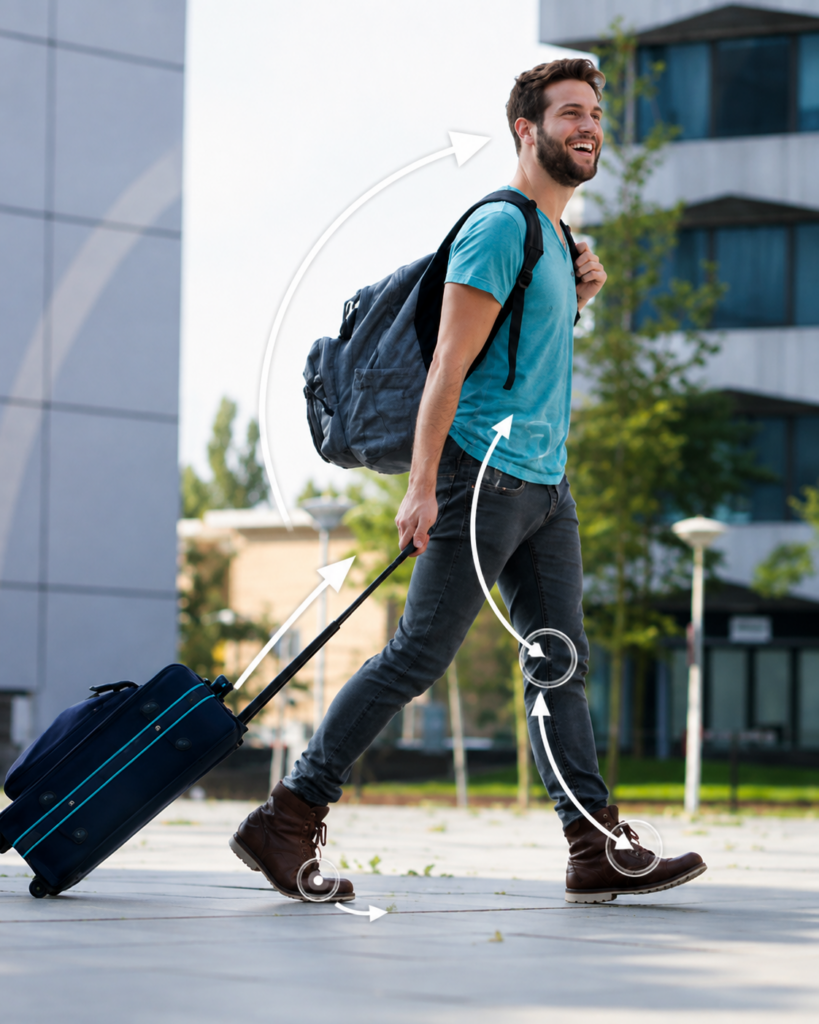
Movement must be managed at the ankle level; otherwise, to avoid falling, the foot must not only adapt to the terrain but also compensate for any movements transferred to the body segments above it.
Controlling movement from below, while minimizing torso sway, allows for faster and more energy-efficient adjustments; it also relieves the spine and the vestibular system of tasks they are not designed to handle, except in emergency situations.
A common mistake when managing instability during exercises is “freezing” the foot and transferring perturbations to the segments above: to regain balance, the athlete suppresses swaying through co-contraction and compensates by balancing with other body segments. This training approach prevents the foot from regaining its dynamic and postural function and fails to restore its adaptive and compensatory role.
Benefits

Calibration of the tonic postural system

Increased neuromuscular control and localized strength.

Refinement of general movement patterns to achieve movement efficiency.

Prevention of posture-related conditions such as back pain or muscle injuries.
A single solution for all your needs
Discover the path best suited to your goals

SPORT AND FITNESS
In the sports sector, rehabilitation aims to enhance performance and prevent injuries, significantly reducing sprains, muscle disorders, and recurrences.
Improving postural control allows for the enhancement of an athlete’s physical capabilities, such as movement speed and agility.

REHAB
In the field of physiotherapy, retraining aims to improve balance and stability by reducing visual dependency and eliminating compensatory movements in the upper body.
These aspects are crucial at any age:
- During development, it helps improve coordination, posture, and balance.
- In a rehabilitation context, it aims to prevent recurrence and restore physical and postural efficiency.
- For the elderly, retraining focuses on enhancing remaining capabilities, maintaining functional efficiency, reducing the risk of falls, and delaying the effects of aging.